
Avalanche DeFi total value locked (TVL) fell 23.39% in 30 days to $471.30M as of June 27, 2026, down from $615.20M.
Key takeaways
- Avalanche DeFi total value locked (TVL) fell 23.39% in 30 days to $471.30M as of June 27, 2026, down from $615.20M.
- Decentralized exchange volume on Avalanche declined 35.34% over the same 30-day period, with 24-hour DEX volume at $61.73M as of June 27, 2026.
- USDT supply on Avalanche contracted 13.87% over 30 days to $372.60M, representing 0.20% of USDT’s $185.16B global circulating supply.
Avalanche DeFi TVL Falls 23% in Month to $471M as Stablecoin Outflows Accelerate
Three of Avalanche’s core on-chain gauges are bleeding in the same direction, and that’s what makes the past month worth reading closely. Total value locked dropped 23.39% in the 30 days to June 27, 2026, sliding from $615.20M to $471.30M. DEX volume and stablecoin supply fell alongside it. This isn’t one metric wobbling; it’s capital stepping back across the board.
TVL and Volume Slide in Tandem
The $143.90M that left Avalanche’s DeFi TVL over those 30 days came with an even sharper pullback in trading. DEX volume fell 35.34% across the same window, putting 24-hour turnover at $61.73M as of June 27, 2026. Set that against the $7.68B in total on-chain DEX volume recorded across all chains over the same 24 hours, and Avalanche’s slice works out to 0.80%, below a single percentage point of global decentralized trading.
Read the two declines together and a specific story emerges. TVL is down roughly 23%; DEX volume is down more than 35%. The liquidity still sitting on the chain is turning over less than it did a month ago, not simply draining in lockstep with the capital that left.
Stablecoin Supply Signals Capital Withdrawal
The stablecoin numbers point the same way. USD-pegged stablecoins on Avalanche total $1.37B as of June 27, 2026. Inside that pool, USDT fell 13.87% over 30 days, from $432.57M on May 28, 2026 to $372.60M. That leaves Avalanche holding 0.20% of USDT’s $185.16B global circulating supply.
Chain-level stablecoin balances work as a rough proxy for deployable capital, so when they shrink it usually means participants are pulling liquidity out or redeeming rather than rotating into fresh positions. That roughly $60M USDT contraction over 30 days is a second, independent line drawn under the TVL drop.
AVAX Price Context
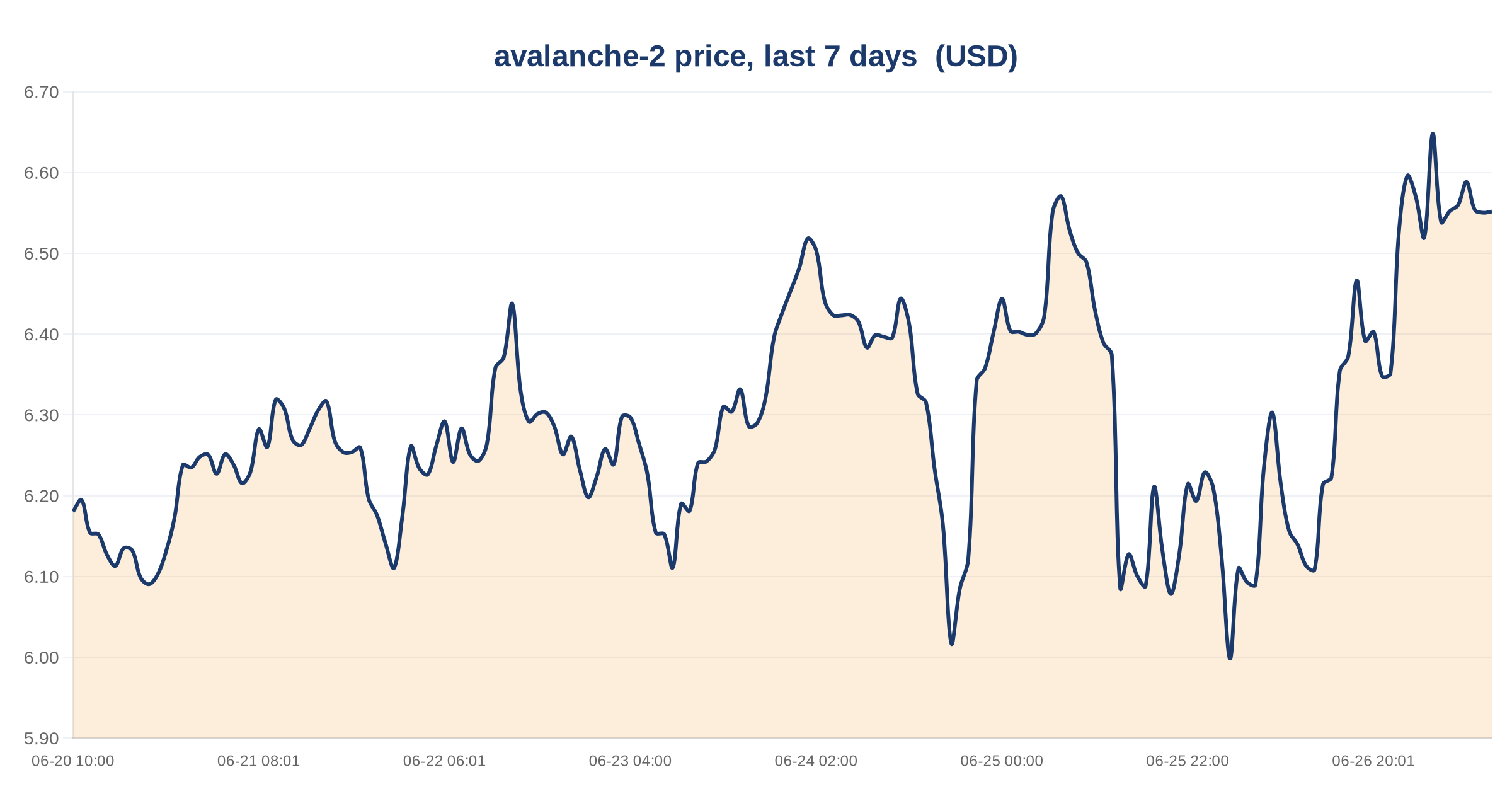
Price is the one figure cutting against the grain. AVAX trades at $6.55 with a market capitalization of $2.83B as of June 27, 2026, after a 24-hour gain of 5.45% on that date. Spot momentum and protocol-level activity are pulling in opposite directions here, a reminder that the two can diverge across different time horizons.
Why It Matters
- A 23.39% TVL decline strips roughly $143.90M out of capital actively deployed in Avalanche DeFi protocols inside a single month, a meaningful move in absolute terms.
- DEX volume falling faster (35.34%) than TVL (23.39%) means the liquidity still present is generating proportionally less trading than it did 30 days prior.
- Avalanche’s 0.80% share of global daily DEX volume and 0.20% share of total USDT supply set the benchmarks for where the chain’s footprint sits in the wider DeFi ecosystem right now.
- USDT supply down 13.87% over 30 days, alongside the TVL drop, points to outflows that span more than one protocol category, a broader pullback in on-chain capital allocation.
Disclaimer: Market data is informational only and not investment advice. Figures are accurate as of the stated dates and change continuously.
Featured illustration is AI-generated.
Frequently Asked Questions
How much did Avalanche DeFi TVL decline over the past month?
Avalanche DeFi total value locked (TVL) fell 23.39% over 30 days to $471.30M as of June 27, 2026, down from $615.20M, representing a loss of approximately $143.90M.
Why did DEX volume fall faster than TVL on Avalanche?
DEX volume on Avalanche declined 35.34% over the same 30-day period compared to TVL’s 23.39% decline, meaning the liquidity remaining on the chain is generating proportionally less trading activity than it did 30 days prior.
What do stablecoin outflows indicate about Avalanche capital?
USDT supply on Avalanche contracted 13.87% over 30 days to $372.60M, and since chain-level stablecoin balances serve as a proxy for deployable capital, this decline suggests participants are withdrawing liquidity or redeeming positions rather than rotating into new ones.
What is Avalanche’s current share of global DeFi activity?
As of June 27, 2026, Avalanche accounted for 0.80% of all on-chain DEX volume over the last 24 hours and holds 0.20% of USDT’s $185.16B global circulating supply.
Data & sources
Every figure in this article is pulled from live on-chain data and linked to its source and the date it was read.
- Price: $6.55 (as of 2026-06-27) — source [API]
- 24-hour price change: +5.45% (as of 2026-06-27) — source [API]
- DeFi TVL: $471.30M (as of 2026-06-27) — source [API]
- DeFi TVL 30-day change: -23.39% (as of 2026-06-27) — source [API]
- DEX volume (24h): $61.73M (as of 2026-06-27) — source [API]
- DEX volume 30-day change: -35.34% (as of 2026-06-27) — source [API]
- Share of all DEX volume: +0.80% (as of 2026-06-27) — source [API]
- Total stablecoin supply on chain: $1.37B (as of 2026-06-27) — source [API]
- Stablecoin supply on chain: $372.60M (as of 2026-06-27) — source [API]
- Stablecoin 30-day supply change: -13.87% (as of 2026-06-27) — source [API]
- Stablecoin chain share: +0.20% (as of 2026-06-27) — source [API]
Methodology: every figure above links to its live on-chain source (DeFiLlama, CoinGecko) and the date it was read; analysis by Blockchain Magazine. Informational only, not investment advice.
Stay informed with daily updates from Blockchain Magazine on Google News. Click here to follow us and mark as favorite: [Blockchain Magazine on Google News].
Disclaimer: Any post shared by a third-party agency are sponsored and Blockchain Magazine has no views on any such posts. The views and opinions expressed in this post are those of the clients and do not necessarily reflect the official policy or position of Blockchain Magazine. The information provided in this post is for informational purposes only and should not be considered as financial, investment, or professional advice. Blockchain Magazine does not endorse or promote any specific products, services, or companies mentioned in this posts. Readers are encouraged to conduct their own research and consult with a qualified professional before making any financial decisions.
About the Author: John Brok

