Bitcoin network hash rate stands at 1,035.78 EH/s with difficulty at 1.327e+14 as of 2026-10-12, generating blocks every 8.53 minutes against a 10-minute protocol target.
Key takeaways
- Bitcoin network hash rate stands at 1,035.78 EH/s with difficulty at 1.327e+14 as of 2026-10-12, generating blocks every 8.53 minutes against a 10-minute protocol target.
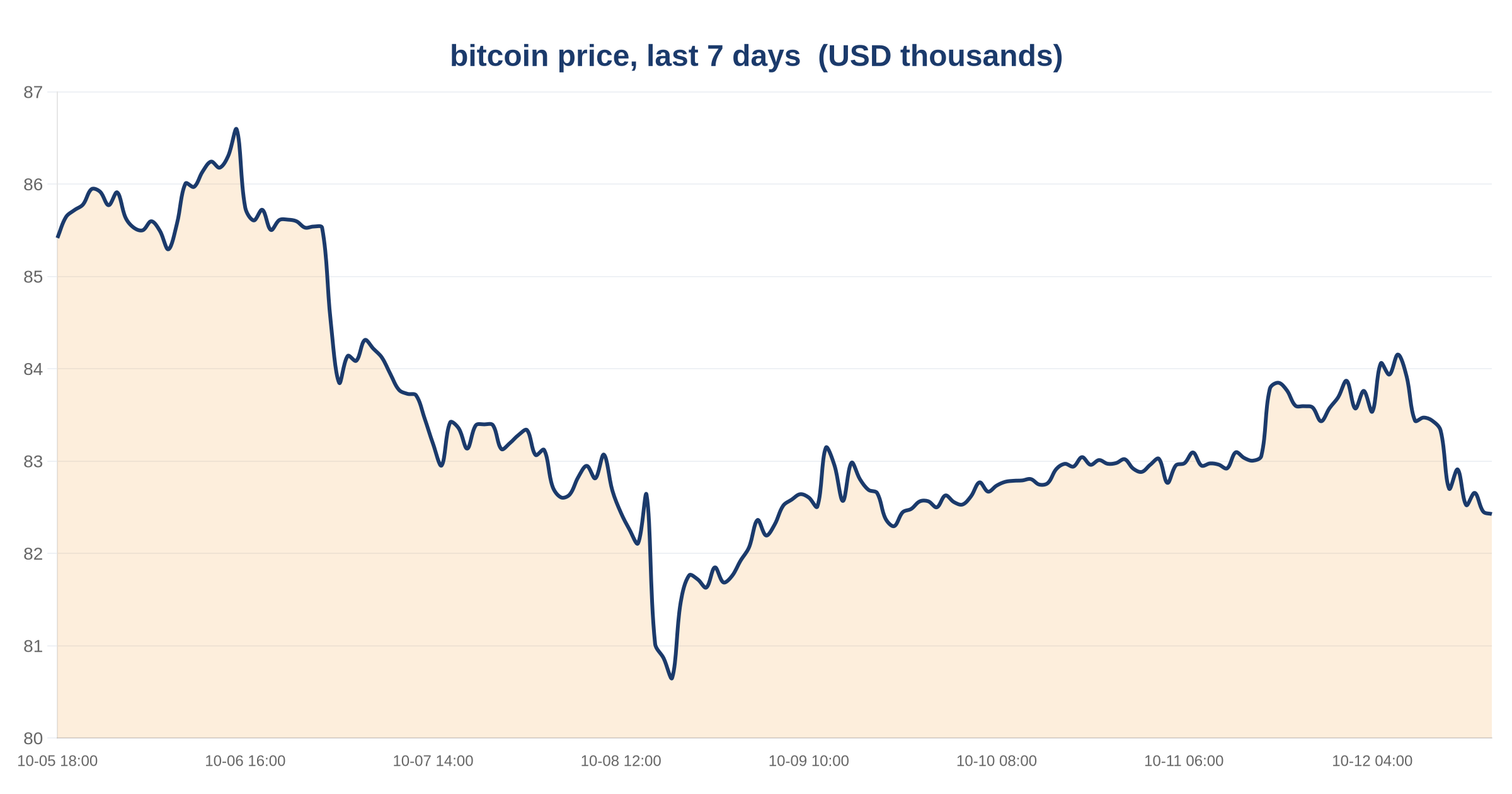
- Bitcoin price declined 1.83% to $82,399 over the prior 24 hours as of 2026-10-12, creating margin pressure as rising difficulty increases mining energy costs.
- Approximately 95.7% of Bitcoin’s 21,000,000 maximum supply has been mined (20,097,250 BTC), shifting miner revenue dependency from block subsidies toward transaction fees as supply depletes.
- The Bitcoin network processed 807,066 transactions in the 24 hours ending 2026-10-12, representing the on-chain activity generating transaction fee revenue for miners.
| Metric | Value | As of | Source |
|---|---|---|---|
| btc hash rate | 1035.7836769803594 | 2026-10-12 | source |
| btc difficulty | 132716002350731 | 2026-10-12 | source |
| btc tx 24h | 807066 | 2026-10-12 | source |
| btc block time | 8.5256 | 2026-10-12 | source |
| btc supply mined | 20097250 | 2026-10-12 | source |
| Price | $82.40K | 2026-10-12 | source |
| 24-hour price change | -1.83% | 2026-10-12 | source |
Miners Keep Pouring In Power as Revenue Softens — and the Numbers Say That’s Getting Harder to Hold
The sharpest tension in miner economics right now sits off the price ticker, in the gap between two figures. Hash rate reads 1,035.78 EH/s as of 2026-10-12, a mountain of committed computational work. Blocks, meanwhile, are landing every 8.53 minutes on average, well under the 10-minute target the protocol defends. Blocks arriving faster than target is a direct tell: collective mining power has outrun the current difficulty of 1.327e+14. Read it straight, the data implies the next difficulty adjustment moves up, raising the computational cost of winning each block reward at exactly the moment BTC trades at $82,399, down 1.83% over the prior 24 hours.
That is a textbook margin squeeze. Difficulty, and therefore the energy cost per block, is set to rise. The block reward valued in dollars, the other side of the equation, is facing price softness. Miners who deployed hardware betting on sustained price levels now have to weigh that cost structure against a spot price that slipped in the near term.
A second structural pressure stacks on top. Of Bitcoin’s hard-capped 21,000,000 BTC, 20,097,250 have already been mined, roughly 95.7% of the total, with a market capitalization of $1.66T behind that supply. Successive halvings govern what’s left, so block subsidies shrink as a share of miner revenue by design. At $82,399 each newly issued coin still carries real weight, but with supply nearly exhausted, transaction fees matter more to miner income with every passing cycle. The network cleared 807,066 transactions in the last 24 hours, a baseline read on that fee-generating activity.
Stitch it together and you get a mining sector holding capital commitment near its highest recorded levels, even as the economics justifying that commitment take simultaneous hits from price and from the difficulty increase that sub-target block times already imply.
Why It Matters
- Block times point to a difficulty increase. At 8.53 minutes against a 10-minute target, the network is on pace to tighten difficulty, lifting the energy cost per block for everyone still mining.
- Price and hash rate are pulling apart short-term. A 1.83% price decline alongside rising computational commitment compresses the gap between revenue and cost, the variable that decides whether higher-cost operators stay profitable.
- Supply exhaustion rewrites the revenue model. With 95.7% of all BTC already issued, long-run miner economics lean less on block subsidies and more on fee volume, which makes on-chain activity, 807,066 transactions in 24 hours, a metric to watch right next to price and hash rate.
Disclaimer: Market data is informational only and not investment advice. Figures are accurate as of the stated dates and change continuously.
Frequently Asked Questions
What is the current Bitcoin network hash rate and difficulty?
As of 2026-10-12, the Bitcoin network hash rate stands at 1,035.78 EH/s with a difficulty level of 1.327e+14. Blocks are currently being generated every 8.53 minutes on average, which is faster than the protocol’s 10-minute target.
Why are miners facing margin pressure right now?
Miners face margin pressure from two simultaneous pressures: Bitcoin’s price declined 1.83% to $82,399 over the prior 24 hours, while faster-than-target block times indicate an upcoming difficulty increase that will raise computational energy costs per block.
How does Bitcoin’s supply depletion affect miner revenue?
Approximately 95.7% of Bitcoin’s 21,000,000 maximum supply has been mined (20,097,250 BTC), which means miner revenue is increasingly dependent on transaction fees rather than block subsidies as supply depletes. The network processed 807,066 transactions in the last 24 hours, representing the on-chain activity that generates fee revenue.
Data & sources
Every figure in this article is pulled from live on-chain data and linked to its source and the date it was read.
- btc hash rate: 1035.7836769803594 (as of 2026-10-12) — source [API]
- btc difficulty: 132716002350731 (as of 2026-10-12) — source [API]
- btc tx 24h: 807066 (as of 2026-10-12) — source [API]
- btc block time: 8.5256 (as of 2026-10-12) — source [API]
- btc supply mined: 20097250 (as of 2026-10-12) — source [API]
- Price: $82.40K (as of 2026-10-12) — source [API]
- 24-hour price change: -1.83% (as of 2026-10-12) — source [API]
Methodology: every figure above links to its live on-chain source (DeFiLlama, CoinGecko) and the date it was read; analysis by Blockchain Magazine. Informational only, not investment advice.
Stay informed with daily updates from Blockchain Magazine on Google News. Click here to follow us and mark as favorite: [Blockchain Magazine on Google News].
Disclaimer: Any post shared by a third-party agency are sponsored and Blockchain Magazine has no views on any such posts. The views and opinions expressed in this post are those of the clients and do not necessarily reflect the official policy or position of Blockchain Magazine. The information provided in this post is for informational purposes only and should not be considered as financial, investment, or professional advice. Blockchain Magazine does not endorse or promote any specific products, services, or companies mentioned in this posts. Readers are encouraged to conduct their own research and consult with a qualified professional before making any financial decisions.
About the Author: John Brok