The Bitcoin network hash rate reached 1,013.28 EH/s as of October 21, 2026, while processing 676,940 transactions in the prior 24 hours.
Key takeaways
- The Bitcoin network hash rate reached 1,013.28 EH/s as of October 21, 2026, while processing 676,940 transactions in the prior 24 hours.
- Bitcoin mining difficulty stands at 1.406×10¹⁴, requiring miners to perform trillions of computational attempts to find valid blocks roughly every 9.38 minutes.
- 20,101,387.5 BTC of the 21,000,000 maximum supply has been mined as of October 21, 2026, with remaining coins released gradually through shrinking per-block subsidies.
| Metric | Value | As of | Source |
|---|---|---|---|
| Price | $83.27K | 2026-10-21 | source |
| 24-hour price change | +2.32% | 2026-10-21 | source |
| btc hash rate | 1013.2823849968614 | 2026-10-21 | source |
| btc difficulty | 140577680051919 | 2026-10-21 | source |
| btc tx 24h | 676940 | 2026-10-21 | source |
| btc block time | 9.3819 | 2026-10-21 | source |
| btc supply mined | 20101387.5 | 2026-10-21 | source |
A Mountain of Computation, a Measured Trickle of Blocks
Price isn’t the most revealing number on the Bitcoin network right now. The tension sits elsewhere: between the scale of work the network performs and the modest volume of transactions that work actually settles. As of October 21, 2026, miners are collectively producing 1,013.28 EH/s, yet the network confirms a block every 9.38 minutes and settled 676,940 transactions over the day. Most of that computation isn’t throughput at all. It’s security.
What Miners Are Actually Doing
Every unit of that 1,013.28 EH/s is hardware generating a candidate block header and running it through a cryptographic function, hoping the output lands below a target set by the network’s difficulty parameter, currently 1.406×10¹⁴. That figure counts nothing mined; it’s a threshold. The higher it climbs, the rarer a valid solution becomes, and the more attempts the network must make before one miner finds one. At the present difficulty, producing valid blocks at the observed pace demands exactly that scale of effort spread across every participant.
The output is a block roughly every 9.38 minutes. That pace runs slightly ahead of where the last difficulty adjustment anticipated, which tells you hash rate has grown since the recalibration. The protocol will respond by nudging difficulty upward.
Those blocks carry the 676,940 transactions processed in the most recent 24-hour window. Spread across the day’s blocks, that figure shows how much economic activity each winning miner is packaging and permanently recording. Every confirmed block becomes a cryptographically sealed page, one that would require reconstructing an equivalent amount of computational work to rewrite.
Supply: Nearly Complete, Never Quite Finished
Miners also mint new BTC as a block subsidy. As of October 21, 2026, 20,101,387.5 BTC of the 21,000,000 hard-capped maximum has been issued. The remainder enters circulation gradually across future subsidies, with each halving trimming the per-block issuance further.
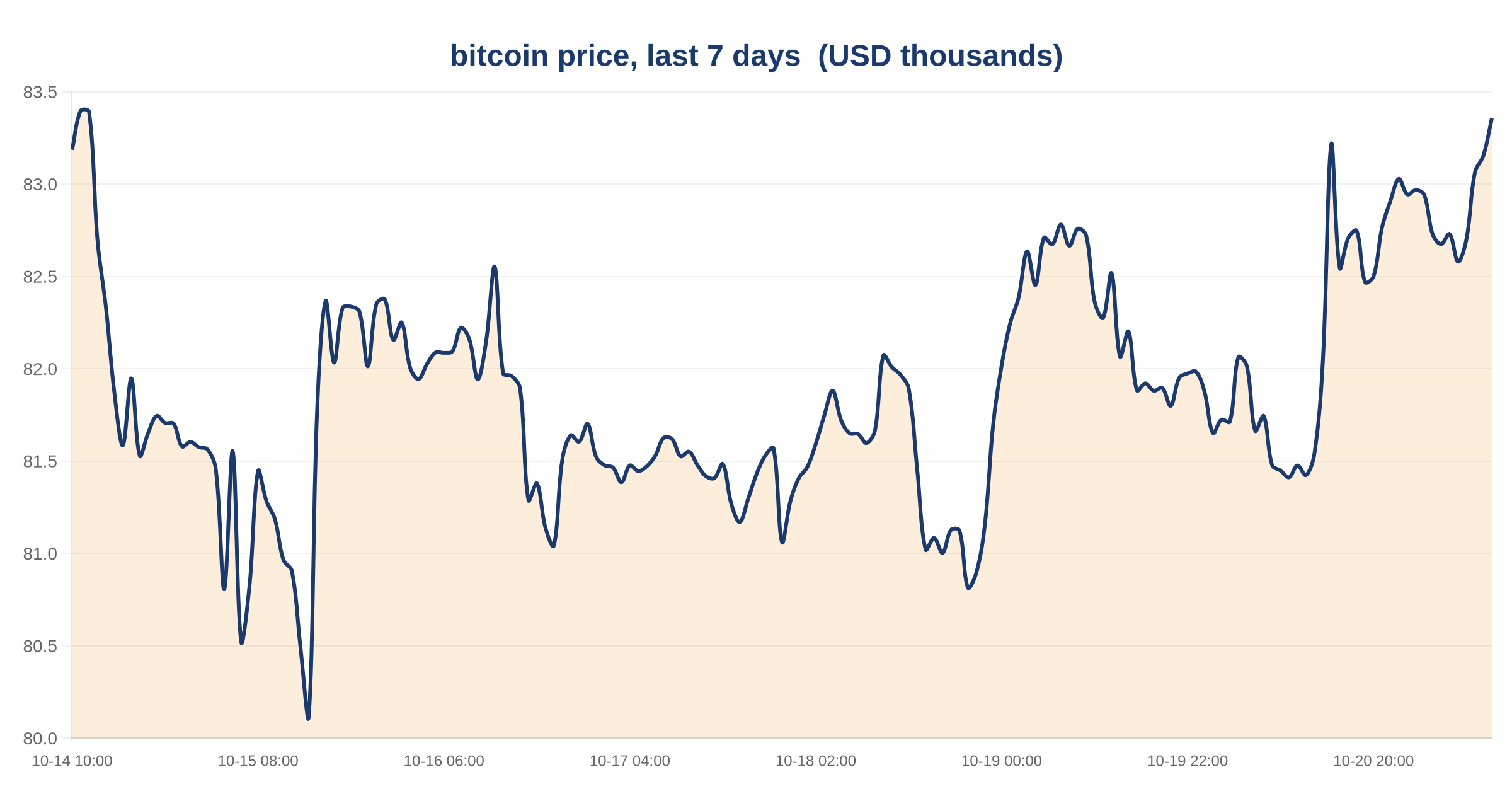
BITCOIN trades at $83,272.00 against a market capitalization of $1.67T, and posted a +2.32% move in the 24 hours ending October 21.
Why It Matters
- Security is the product, not a byproduct. The 1,013.28 EH/s isn’t wasted effort running alongside transaction processing. It’s what makes the 676,940 daily transactions irreversible. More hash rate, higher cost to mount a rewrite.
- The supply story is winding down. With 20,101,387.5 BTC of the 21,000,000 cap already issued, the subsidy that pays miners keeps shrinking. Fees from the 676,940 daily transactions grow into the economic signal miners lean on.
- Block timing is a live calibration. The 9.38-minute average signals hash rate has grown since the last difficulty adjustment, a gap the protocol closes automatically.
Disclaimer: Market data is informational only and not investment advice. Figures are accurate as of the stated dates and change continuously.
Frequently Asked Questions
What does Bitcoin’s 1 trillion hash rate actually do?
Miners use that 1,013.28 EH/s of computational power to generate candidate block headers and run them through a cryptographic function, attempting to find valid blocks below the network’s difficulty threshold of 1.406×10¹⁴. This massive computation secures the 676,940 transactions processed daily by making them cryptographically irreversible—security is the primary product, not a byproduct of transaction processing.
How often does Bitcoin find a new block with all this mining power?
The Bitcoin network produces a new block roughly every 9.38 minutes on average as of October 21, 2026. This pace signals that hash rate has grown since the last difficulty adjustment, which the protocol will respond to by increasing difficulty upward.
How much Bitcoin is left to mine?
As of October 21, 2026, 20,101,387.5 BTC of the 21,000,000 maximum supply has been mined, leaving approximately 899,612.5 BTC remaining. The remaining coins enter circulation gradually through shrinking per-block subsidies as the protocol approaches its hard cap.
Why does the network need so much computational power for just 676,940 daily transactions?
The 1,013.28 EH/s of work is primarily dedicated to security rather than transaction throughput. Each confirmed block becomes a cryptographically sealed record that would require reconstructing an equivalent amount of computational work to rewrite, making the network’s transaction history irreversible.
Data & sources
Every figure in this article is pulled from live on-chain data and linked to its source and the date it was read.
- Price: $83.27K (as of 2026-10-21) — source [API]
- 24-hour price change: +2.32% (as of 2026-10-21) — source [API]
- btc hash rate: 1013.2823849968614 (as of 2026-10-21) — source [API]
- btc difficulty: 140577680051919 (as of 2026-10-21) — source [API]
- btc tx 24h: 676940 (as of 2026-10-21) — source [API]
- btc block time: 9.3819 (as of 2026-10-21) — source [API]
- btc supply mined: 20101387.5 (as of 2026-10-21) — source [API]
Methodology: every figure above links to its live on-chain source (DeFiLlama, CoinGecko) and the date it was read; analysis by Blockchain Magazine. Informational only, not investment advice.
Stay informed with daily updates from Blockchain Magazine on Google News. Click here to follow us and mark as favorite: [Blockchain Magazine on Google News].
Disclaimer: Any post shared by a third-party agency are sponsored and Blockchain Magazine has no views on any such posts. The views and opinions expressed in this post are those of the clients and do not necessarily reflect the official policy or position of Blockchain Magazine. The information provided in this post is for informational purposes only and should not be considered as financial, investment, or professional advice. Blockchain Magazine does not endorse or promote any specific products, services, or companies mentioned in this posts. Readers are encouraged to conduct their own research and consult with a qualified professional before making any financial decisions.
About the Author: John Brok