Bitcoin has mined 20,067,084.375 of its 21,000,000 maximum supply (95.6%), leaving fewer than 933,000 coins ever to be issued.
Key takeaways
- Bitcoin has mined 20,067,084.375 of its 21,000,000 maximum supply (95.6%), leaving fewer than 933,000 coins ever to be issued.
- The Bitcoin network processed 641,000 transactions in the 24 hours ending August 7, 2026, while maintaining a hash rate of 909.88 EH/s.
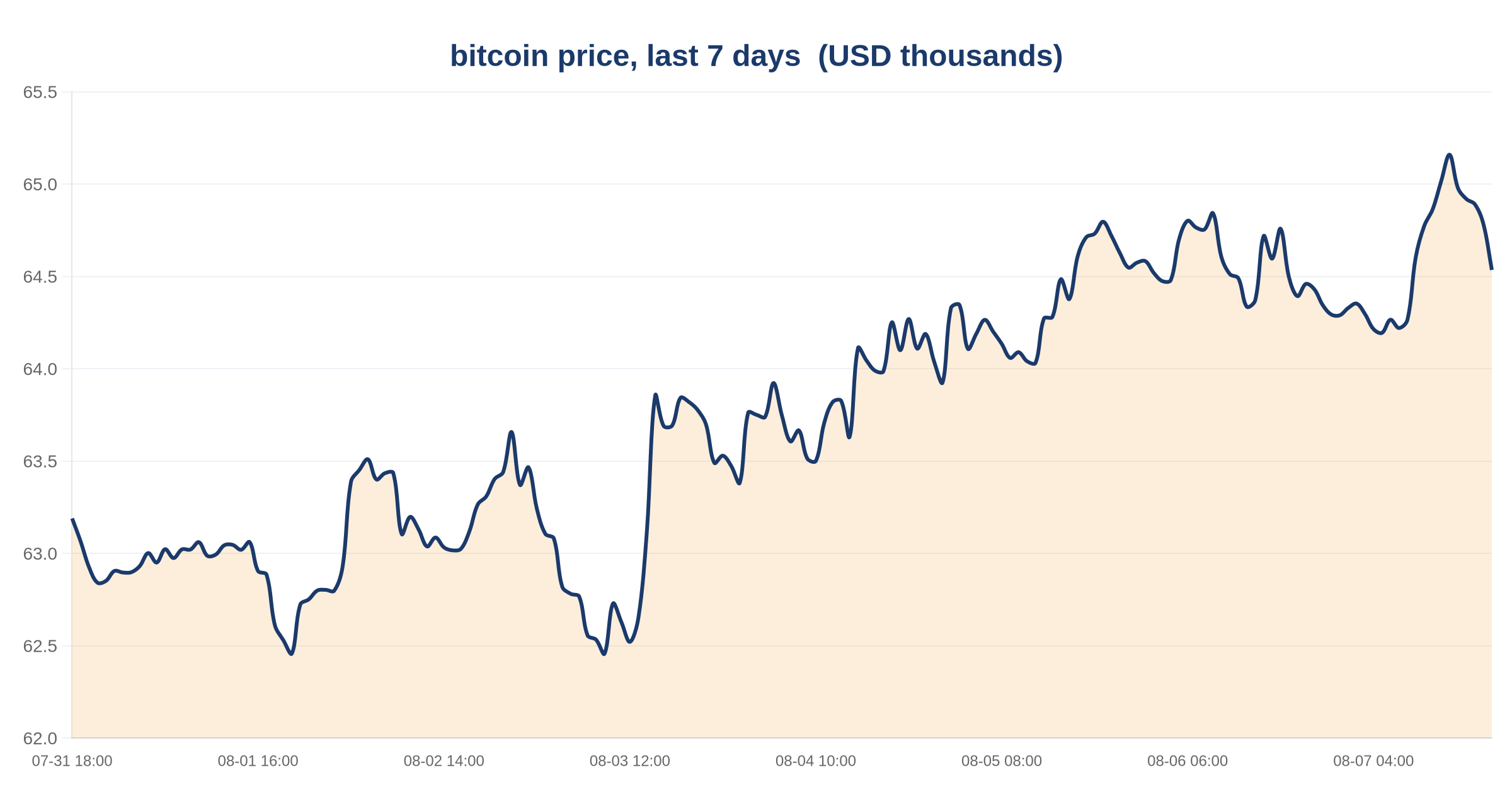
- Bitcoin trades at $64,534.00 with a $1.29 trillion market capitalization as of August 7, 2026, down 0.12% over the prior 24 hours.
- The network’s difficulty adjustment mechanism keeps average block intervals at 9.44 minutes, close to the 10-minute protocol target, regardless of hash rate changes.
Bitcoin at 95.6% Supply Exhaustion: A Network Running Harder as Its Coin Issuance Winds Down
Forget the price for a second. The sharpest read in Bitcoin’s August 7, 2026 snapshot is a divergence: the supply is nearly spent, and the network is working flat out anyway. 20,067,084.375 BTC of the 21,000,000 maximum has already been mined, which leaves fewer than 933,000 coins ever to be issued. Meanwhile the network cleared 641,000 transactions in a single 24-hour window and held a hash rate of 909.88 EH/s. Usage and raw computational commitment are climbing exactly as new coin creation thins out.
How the Network Actually Works
Bitcoin is a decentralized ledger kept by a global set of computers competing to bundle and confirm transactions into blocks. Miners run that hardware, spending computational energy to solve a mathematical puzzle; whoever wins adds the next block and collects newly issued BTC plus transaction fees. A difficulty adjustment keeps the whole thing honest: add more computing power, and the puzzle gets harder, so block production stays roughly constant.
Today’s figures show that self-regulation at work. The average interval between blocks sits at 9.44 minutes, close to the protocol’s 10-minute target. Difficulty is calibrated at 1.262 × 10¹⁴, the specific setting needed to hold that cadence against the 909.88 EH/s currently aimed at the network. One exahash is a quintillion hash computations per second. Multiply that by 909.88 and you get a sense of the physical infrastructure standing behind every confirmed transaction.
641,000 Transactions Against a Near-Exhausted Supply
Those 641,000 daily transactions are settling against a base where 95.6% of all Bitcoin that will ever exist has already been mined. The hard cap of 21,000,000 BTC isn’t a forecast; it’s written into the protocol. With 20,067,084.375 BTC in circulation, what’s left to issue is a shrinking slice of total supply, released across future blocks at a rate that halves periodically by design.
Price tells the market’s side. Bitcoin’s $1.29T market capitalization, at $64,534.00 and essentially flat over the prior 24 hours at -0.12%, reflects how the market values that circulating supply right now. A steady price sitting next to that high transaction count reads one way: the network is being used for settlement, not idling.
Why It Matters
- Supply scarcity is structural, not speculative. At 95.6% mined, the hard cap has stopped being a distant abstraction. The remaining coins are a mathematically defined, shrinking remainder.
- Security spending is high despite declining issuance. A hash rate of 909.88 EH/s means miners are committing serious real-world resources to secure the network, even as the block reward they earn represents a smaller share of total supply.
- Transaction fees become increasingly load-bearing. As new issuance trends toward zero, the 641,000 daily transactions and the fees they generate become the economic base that pays miners to hold the 909.88 EH/s in place. Keep the network running at scale, and that transaction demand has to persist.
Read at this supply stage, Bitcoin looks less like a nascent experiment and more like a mature settlement network: fixed rules, issuance nearly complete, and proof of work funded more and more by what users do than by new coins minted. Watch whether those 641,000 daily transactions hold, because that’s the number that pays for the 909.88 EH/s.
Disclaimer: Market data is informational only and not investment advice. Figures are accurate as of the stated dates and change continuously.
Frequently Asked Questions
How many Bitcoin have been mined so far?
As of August 7, 2026, 20,067,084.375 BTC of the 21,000,000 maximum supply has been mined, representing 95.6% of all Bitcoin that will ever exist. Fewer than 933,000 coins remain to be issued.
How many transactions does the Bitcoin network process daily?
The Bitcoin network processed 641,000 transactions in the 24 hours ending August 7, 2026.
What is the current Bitcoin price and market cap?
As of August 7, 2026, Bitcoin trades at $64,534.00 with a market capitalization of $1.29 trillion, down 0.12% over the prior 24 hours.
How does Bitcoin maintain consistent block production as mining power changes?
Bitcoin uses a difficulty adjustment mechanism that automatically recalibrates the puzzle difficulty to keep average block intervals near the 10-minute protocol target. At 909.88 EH/s network hash rate, the current difficulty is set at 1.262 × 10¹⁴, maintaining an average block interval of 9.44 minutes.
Data & sources
Every figure in this article is pulled from live on-chain data and linked to its source and the date it was read.
- Price: $64.53K (as of 2026-08-07) — source [API]
- 24-hour price change: -0.12% (as of 2026-08-07) — source [API]
- btc hash rate: 909.8753269434728 (as of 2026-08-07) — source [API]
- btc difficulty: 126231507121868 (as of 2026-08-07) — source [API]
- btc tx 24h: 641000 (as of 2026-08-07) — source [API]
- btc block time: 9.4375 (as of 2026-08-07) — source [API]
- btc supply mined: 20067084.375 (as of 2026-08-07) — source [API]
Methodology: every figure above links to its live on-chain source (DeFiLlama, CoinGecko) and the date it was read; analysis by Blockchain Magazine. Informational only, not investment advice.
Stay informed with daily updates from Blockchain Magazine on Google News. Click here to follow us and mark as favorite: [Blockchain Magazine on Google News].
Disclaimer: Any post shared by a third-party agency are sponsored and Blockchain Magazine has no views on any such posts. The views and opinions expressed in this post are those of the clients and do not necessarily reflect the official policy or position of Blockchain Magazine. The information provided in this post is for informational purposes only and should not be considered as financial, investment, or professional advice. Blockchain Magazine does not endorse or promote any specific products, services, or companies mentioned in this posts. Readers are encouraged to conduct their own research and consult with a qualified professional before making any financial decisions.
About the Author: John Brok