
XRP is quietly gaining ground on Wall Street. US-listed spot XRP exchange-traded funds have recorded inflows for 19 trading days in a row, without a single day of withdrawals. This kind of consistency is rare in crypto-linked investment products, where money often moves in and out quickly based on price swings or market emotion.
By the middle of December, total net inflows into XRP ETFs were close to one billion dollars. At the same time, total assets held across these funds reached roughly $1.18 billion. These figures matter not only because of their size, but because they show a steady pattern of buying rather than sudden bursts of short-term interest. This trend suggests that large investors are making planned decisions to hold XRP exposure over time, instead of reacting to daily market movements.
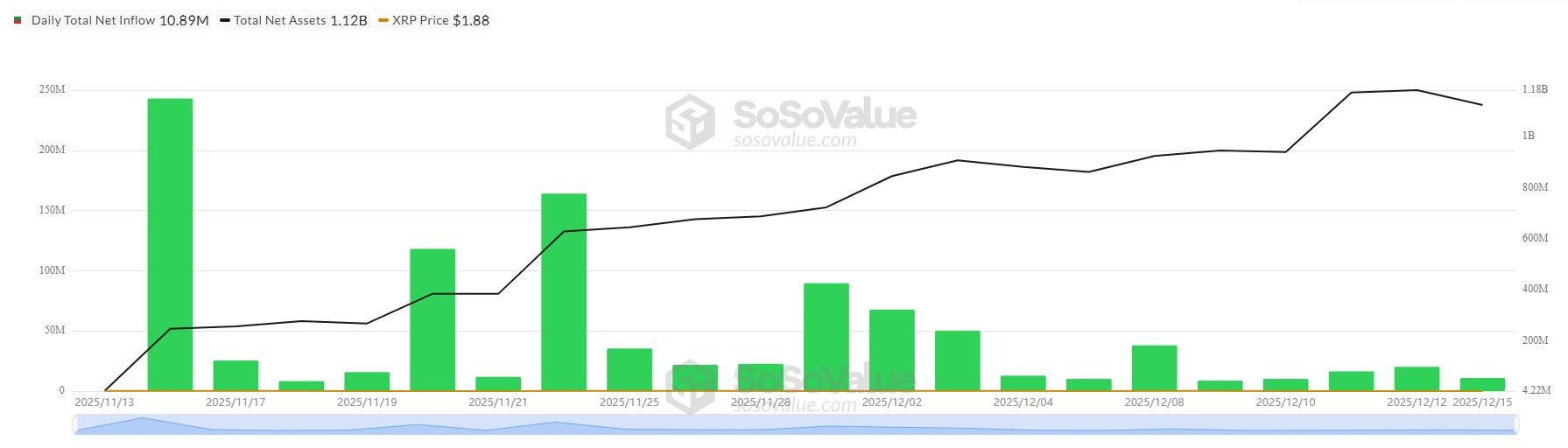
ETF flows often give a clearer picture of investor behavior than price charts alone. Daily data shows that XRP ETFs saw strong buying early in the inflow streak, followed by smaller but consistent additions. Even when the pace slowed, money continued to come in rather than exit. This pattern is important for beginners to understand. When retail investors drive demand, inflows usually rise sharply and then fall just as fast. In contrast, the XRP ETF data looks calm and methodical. It reflects how professional investors usually build positions, adding exposure gradually and sticking to a longer-term plan.
Several market watchers have pointed out that nearly one billion dollars has entered these funds without any meaningful redemptions. That kind of behavior signals confidence in the structure of the product, not just hope for a quick price jump.
XRP ETFs Move Ahead of Solana Products
The impact of this steady demand is already visible. XRP ETFs have now surpassed Solana-based products in total assets under management in the US market. While Bitcoin and Ethereum still dominate the ETF landscape by a wide margin, the shift between XRP and Solana is notable.
This change does not mean one network is better than the other. Instead, it reflects how institutions prefer to access different assets. Solana offers staking and active on-chain use, which often attracts direct token holders. XRP, on the other hand, has long been associated with institutional payments and does not offer staking rewards. Because of this, XRP fits more naturally into a traditional investment wrapper like an ETF. For many institutions, the fund structure is not a compromise but the preferred way to gain exposure.
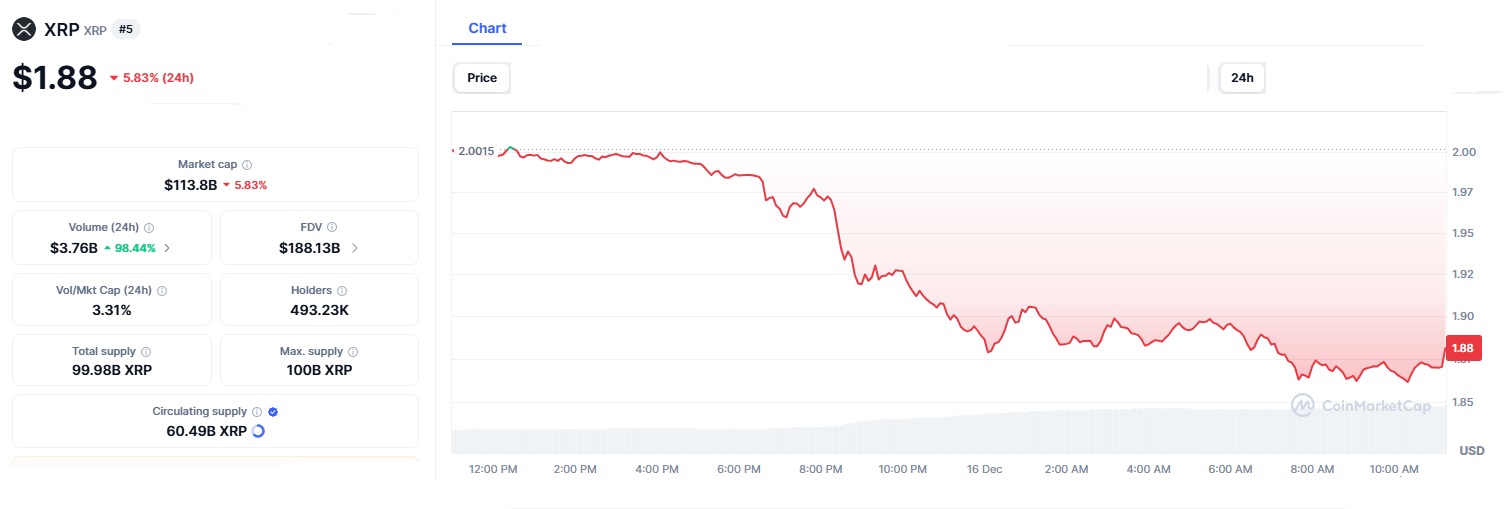
Despite strong ETF inflows, XRP’s price has not surged. Recently, the token slipped below the $2 level, which many traders watch closely. From a technical perspective, this creates uncertainty in the short term. For beginners, this difference between price and investment flows can be confusing. However, it is common for institutions to accumulate assets quietly during periods of weak or unclear price action. In many cases, long-term positioning happens before any major price response becomes visible.
When compared with other crypto ETFs, XRP stands out for its consistency. Bitcoin and Ethereum funds continue to attract money, but their daily flows rise and fall more often. Solana ETFs, meanwhile, have seen much smaller inflows.
XRP is not competing directly with Bitcoin as a store of value or with Ethereum as a platform for decentralized applications. Instead, it is finding a place as a regulated crypto exposure that institutions are comfortable holding within traditional financial systems.
The steady inflows into XRP exchange-traded funds suggest that large investors are treating XRP as a long-term allocation rather than a short-term trade. Even without strong price movement, consistent buying through regulated products shows growing confidence in how XRP fits within traditional investment portfolios.
As institutions continue to add XRP exposure quietly through ETFs, could this steady approach shape how the market values XRP over the long run?
Stay informed with daily updates from Blockchain Magazine on Google News. Click here to follow us and mark as favorite: [Blockchain Magazine on Google News].
Disclaimer: Any post shared by a third-party agency are sponsored and Blockchain Magazine has no views on any such posts. The views and opinions expressed in this post are those of the clients and do not necessarily reflect the official policy or position of Blockchain Magazine. The information provided in this post is for informational purposes only and should not be considered as financial, investment, or professional advice. Blockchain Magazine does not endorse or promote any specific products, services, or companies mentioned in this posts. Readers are encouraged to conduct their own research and consult with a qualified professional before making any financial decisions.
About the Author: John Brok

