Bitcoin’s network hash rate stands at 975.61 EH/s as of 2026-08-30, representing the total computational power securing the network.
Key takeaways
- Bitcoin’s network hash rate stands at 975.61 EH/s as of 2026-08-30, representing the total computational power securing the network.
- The average block interval is 8.49 minutes as of 2026-08-30, faster than the protocol’s 10-minute target, indicating hash rate has outpaced the current mining difficulty of 1.258×10¹⁴.
- The Bitcoin network processed 823,673 transactions in the 24 hours ending 2026-08-30, measuring actual on-chain settlement separately from network security metrics.
- 20,077,281.25 BTC of the 21,000,000 maximum supply has been mined as of 2026-08-30, leaving approximately 923,000 BTC remaining to be issued.
| Metric | Value | As of | Source |
|---|---|---|---|
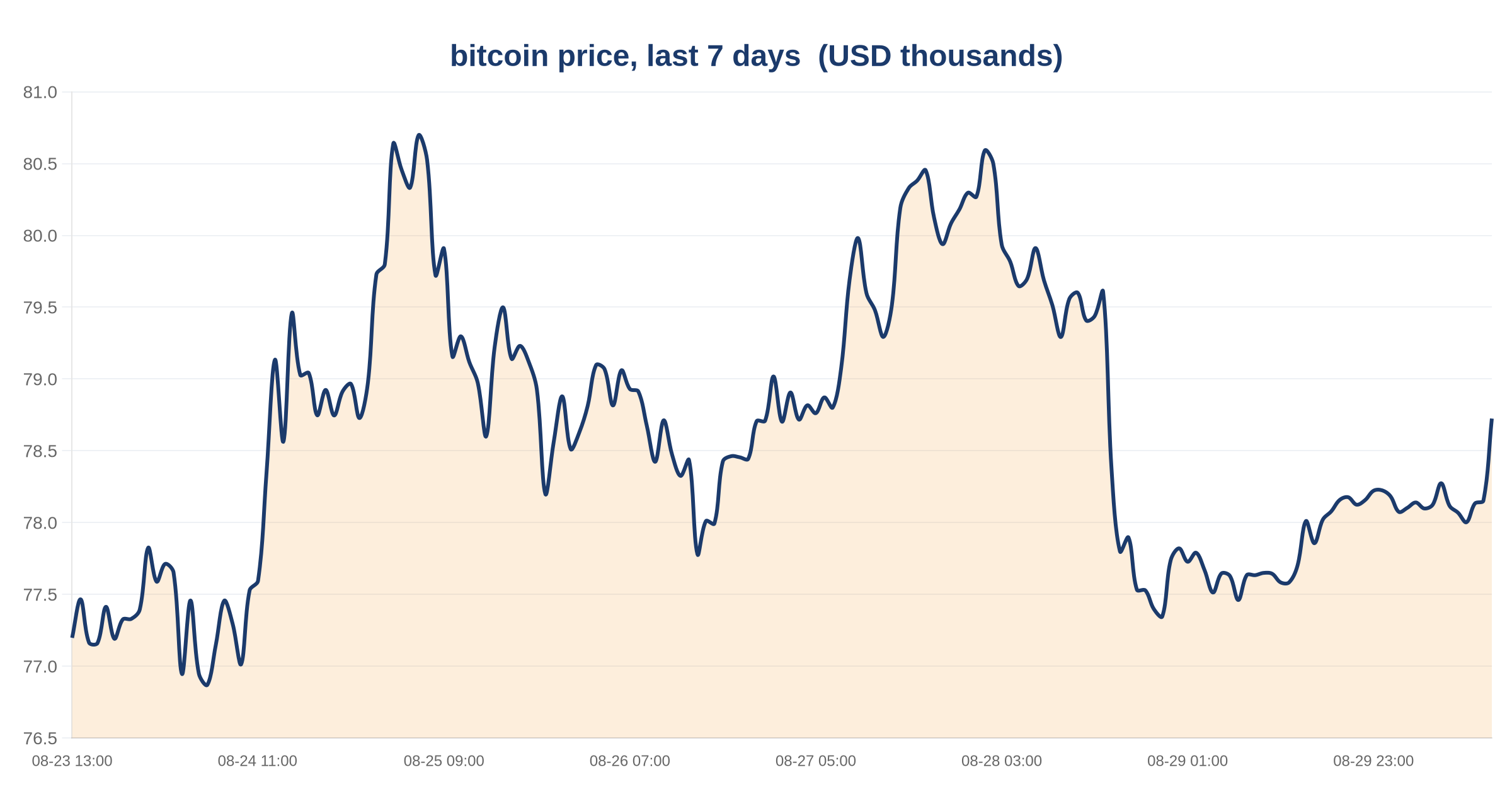
| Price | $78.71K | 2026-08-30 | source |
| 24-hour price change | +1.44% | 2026-08-30 | source |
| btc hash rate | 975.6089766503524 | 2026-08-30 | source |
| btc difficulty | 125807076547197 | 2026-08-30 | source |
| btc tx 24h | 823673 | 2026-08-30 | source |
| btc block time | 8.4903 | 2026-08-30 | source |
| btc supply mined | 20077281.25 | 2026-08-30 | source |
Bitcoin’s Block Clock Is Running Fast, and the Numbers Explain Why
Forget the price for a second. The sharpest signal in Bitcoin’s 2026-08-30 snapshot is a timing mismatch: blocks are landing at an average interval of 8.49 minutes, well under the 10-minute cadence the protocol is built around. Hash rate reads 975.61 EH/s. Put those two figures side by side and the story is clean, more computational power is pointed at the network than the current difficulty setting accounts for, so blocks show up early. Difficulty, sitting at 1.258×10¹⁴, is the exact mechanism designed to reel that back in.
What Each Metric Actually Measures
Hash rate counts how many SHA-256 calculations the whole network runs per second, measured in exahashes, where one exahash is one quintillion attempts. At 975.61 EH/s, miners are collectively firing off roughly 975.61 × 10¹⁸ guesses every second chasing a valid block. Read it as a proxy for the electricity and hardware capital committed to securing the network right now.
Mining difficulty sets the bar rather than measuring effort. Every 2,016 blocks, the protocol recalculates how hard finding a valid block should be, holding the average interval near 10 minutes. A difficulty of 1.258×10¹⁴ means a miner’s hash has to fall below a threshold tied to that number. When hash rate climbs faster than difficulty adjusts, which is precisely what the 8.49-minute interval implies, each block arrives ahead of schedule and the next recalibration is expected to lift the target to compensate.
Transaction volume tracks what the network is actually settling. In the 24 hours ending 2026-08-30, the Bitcoin network processed 823,673 transactions: payments, transfers, and protocol operations written permanently on-chain. That’s a different layer entirely from hash rate or difficulty, which describe the security underneath settlement, not the settlement itself.
The Supply Context
Of the fixed 21,000,000 BTC cap, 20,077,281.25 BTC has already been mined. That leaves fewer than 923,000 BTC still to be issued through block rewards, or roughly 95.6% of total supply already in circulation. As the issuable remainder shrinks, the block subsidy paying miners keeps declining, which pushes transaction fees toward a more structural role in miner revenue over time.
BITCOIN trades at $78,707.00 against a market capitalization of $1.58T, up +1.44% over the prior 24 hours.
Why It Matters
- A block interval under 10 minutes says hash rate has outrun the last difficulty recalibration, a short-lived imbalance the protocol is built to self-correct.
- The 975.61 EH/s committed to Bitcoin security shows up directly in the difficulty figure; read either one without the other and you miss the picture.
- With 95.6% of supply mined, the link between transaction volume and fee revenue grows more structurally important with every difficulty epoch that passes.
Disclaimer: Market data is informational only and not investment advice. Figures are accurate as of the stated dates and change continuously.
Frequently Asked Questions
What does Bitcoin’s network hash rate of 975.61 EH/s actually measure?
Hash rate counts how many SHA-256 calculations the whole network runs per second, representing the total computational power and electricity and hardware capital committed to securing the network right now. At 975.61 EH/s, miners are collectively firing off roughly 975.61 × 10¹⁸ guesses every second chasing a valid block.
Why are Bitcoin blocks arriving faster than the 10-minute target?
Blocks are landing at an average interval of 8.49 minutes because more computational power is pointed at the network than the current difficulty setting of 1.258×10¹⁴ accounts for. The protocol is built to self-correct this imbalance by recalculating difficulty every 2,016 blocks to hold the average interval near 10 minutes.
What does Bitcoin’s 823,673 transactions in 24 hours tell us versus hash rate and difficulty?
Transaction volume tracks what the network is actually settling—payments, transfers, and protocol operations written permanently on-chain—which is a different layer entirely from hash rate or difficulty, which describe the security underneath settlement rather than the settlement itself.
How much of Bitcoin’s total supply has been mined?
20,077,281.25 BTC of the 21,000,000 maximum supply has been mined as of 2026-08-30, leaving fewer than 923,000 BTC still to be issued, or roughly 95.6% of total supply already in circulation.
Data & sources
Every figure in this article is pulled from live on-chain data and linked to its source and the date it was read.
- Price: $78.71K (as of 2026-08-30) — source [API]
- 24-hour price change: +1.44% (as of 2026-08-30) — source [API]
- btc hash rate: 975.6089766503524 (as of 2026-08-30) — source [API]
- btc difficulty: 125807076547197 (as of 2026-08-30) — source [API]
- btc tx 24h: 823673 (as of 2026-08-30) — source [API]
- btc block time: 8.4903 (as of 2026-08-30) — source [API]
- btc supply mined: 20077281.25 (as of 2026-08-30) — source [API]
Methodology: every figure above links to its live on-chain source (DeFiLlama, CoinGecko) and the date it was read; analysis by Blockchain Magazine. Informational only, not investment advice.
Stay informed with daily updates from Blockchain Magazine on Google News. Click here to follow us and mark as favorite: [Blockchain Magazine on Google News].
Disclaimer: Any post shared by a third-party agency are sponsored and Blockchain Magazine has no views on any such posts. The views and opinions expressed in this post are those of the clients and do not necessarily reflect the official policy or position of Blockchain Magazine. The information provided in this post is for informational purposes only and should not be considered as financial, investment, or professional advice. Blockchain Magazine does not endorse or promote any specific products, services, or companies mentioned in this posts. Readers are encouraged to conduct their own research and consult with a qualified professional before making any financial decisions.
About the Author: John Brok