Bitcoin’s network hash rate stands at 971.81 EH/s as of November 17, 2026, with 20,113,359.375 BTC of the 21,000,000 maximum supply already mined.
Key takeaways
- Bitcoin’s network hash rate stands at 971.81 EH/s as of November 17, 2026, with 20,113,359.375 BTC of the 21,000,000 maximum supply already mined.
- The Bitcoin network processed 638,754 transactions in the last 24 hours and averaged 9.46-minute block intervals, below the protocol’s 10-minute design target.
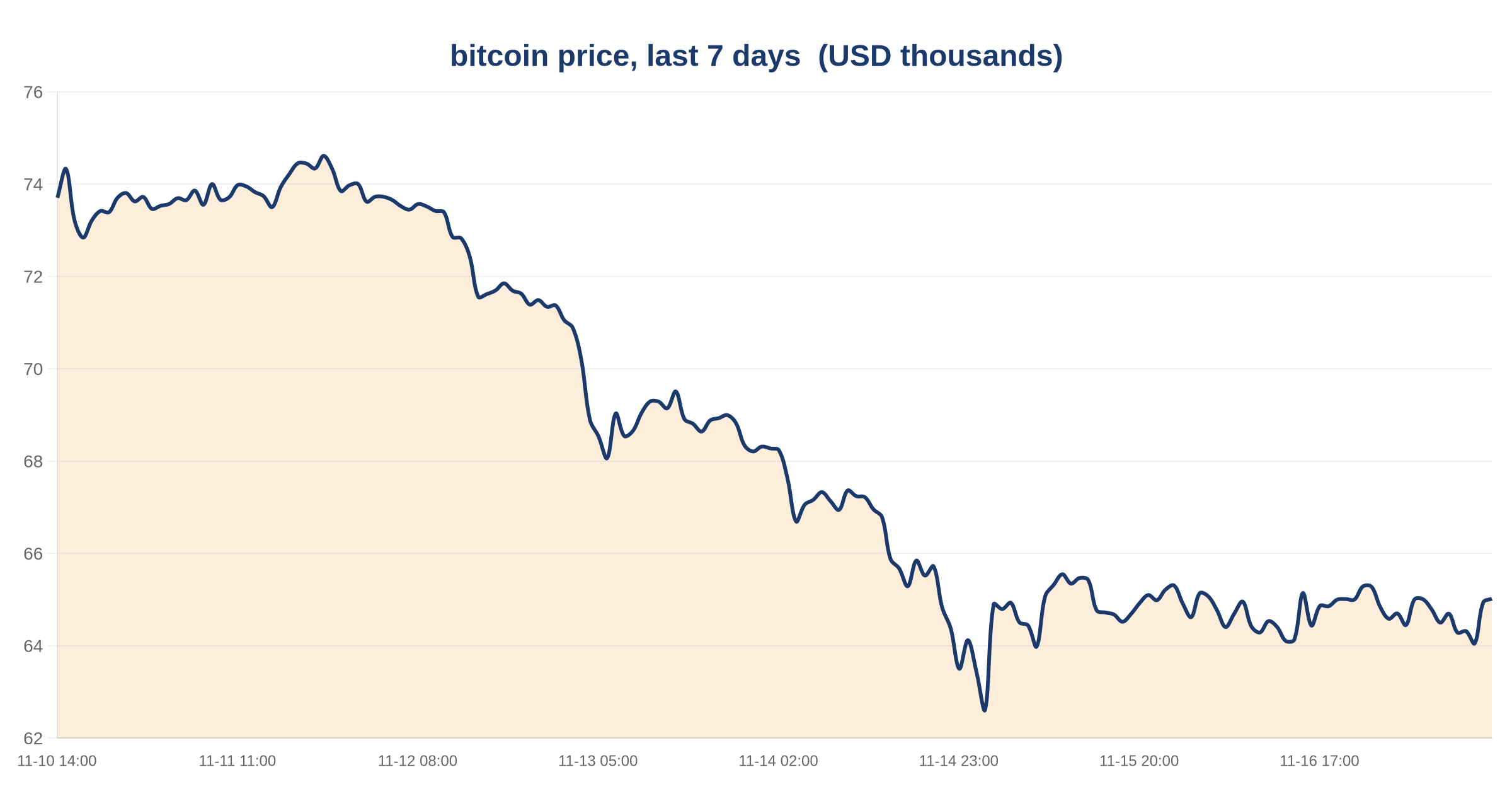
- Bitcoin traded at $65,002.00 with a market capitalization of $1.31 trillion and a 24-hour gain of +1.22% as of November 17, 2026.
| Metric | Value | As of | Source |
|---|---|---|---|
| Price | $65.00K | 2026-11-17 | source |
| 24-hour price change | +1.22% | 2026-11-17 | source |
| btc hash rate | 971.8087493469702 | 2026-11-17 | source |
| btc difficulty | 134823837323272 | 2026-11-17 | source |
| btc tx 24h | 638754 | 2026-11-17 | source |
| btc block time | 9.4583 | 2026-11-17 | source |
| btc supply mined | 20113359.375 | 2026-11-17 | source |
Miners Keep Pouring In Computation as Bitcoin’s Mineable Supply Runs Dry
Read the November 17, 2026 snapshot as accumulation of hardware, not retreat. The sharpest tension in the data isn’t price. It’s the collision between surging miner commitment and a supply nearly tapped out: hash rate sits at 971.81 EH/s against a mining difficulty of 1.348×10¹⁴, while 20,113,359.375 BTC of the 21,000,000 maximum supply has already been mined. Miners are deploying more computation than ever into a resource that is close to exhausted, and that reframes what “securing the network” means at this stage of Bitcoin’s life.
Chase a shrinking block subsidy with this much hardware and the revenue math tilts toward fees. The 638,754 transactions processed over the prior 24 hours are the fee-generating activity that has to shoulder more of the cost of incentivizing 971.81 EH/s over time. The read is direct: the security budget is migrating from subsidy-driven to fee-driven, and today’s transaction count is the baseline that transition will be measured against.
A second signal says the network is running hot. Blocks are arriving every 9.46 minutes on average, under the protocol’s 10-minute design target. Because difficulty calibrates to that 10-minute benchmark, a 9.46-minute interval means aggregate hash rate is outpacing the most recent difficulty setting. Miners have added capacity faster than the protocol has adjusted for, and an upward difficulty revision is the mechanical consequence.
BITCOIN itself trades at $65,002.00, with a market capitalization of $1.31T and a 24-hour move of +1.22% on November 17, 2026. That price change is calm set against the intensity of on-chain computation. Hash rate and difficulty reflect long-term capital sunk into physical hardware, so their elevation alongside a steady price suggests miners are pricing in network value beyond the current spot level.
Why It Matters
- Fee revenue is the network’s future security budget. With 20,113,359.375 BTC of the 21,000,000 cap already mined, the 638,754 daily transactions are the clearest observable measure of whether on-chain demand can eventually replace the block subsidy as miner compensation.
- Block times under 9.5 minutes signal an incoming difficulty increase. A 9.46-minute average, relative to the 10-minute target, means the network is clearing blocks faster than its baseline design: hash rate is running ahead of current difficulty at 1.348×10¹⁴.
- Hash rate near 971.81 EH/s is committed capital. Mining hardware is sunk physical investment, and a reading at this level says miners collectively still treat the network as worth defending at scale, independent of short-term price moves.
The portrait here isn’t a dying chain. It’s a maturing one working through a structural handoff, from a subsidy-anchored security model toward one that has to justify 971.81 EH/s on the fees thrown off by daily transaction volume. Watch the next difficulty revision, because 9.46-minute blocks all but guarantee it.
Disclaimer: Market data is informational only and not investment advice. Figures are accurate as of the stated dates and change continuously.
Frequently Asked Questions
What does Bitcoin’s hash rate tell us about network health?
Bitcoin’s hash rate of 971.81 EH/s represents committed capital from miners and signals they still treat the network as worth defending at scale. The high hash rate alongside steady price suggests miners are pricing in long-term network value independent of short-term price movements.
Why are blocks arriving faster than Bitcoin’s design target?
Bitcoin blocks are averaging 9.46 minutes, below the protocol’s 10-minute design target, because miners have added computational capacity faster than the difficulty algorithm has adjusted. This means aggregate hash rate is currently outpacing the most recent difficulty setting of 1.348×10^14, and an upward difficulty revision is the mechanical consequence.
What role will transaction fees play in Bitcoin’s future?
With 20,113,359.375 BTC of the 21,000,000 maximum supply already mined, the block subsidy is shrinking, and fee revenue from the 638,754 daily transactions must increasingly shoulder the cost of incentivizing the 971.81 EH/s of mining activity. The security budget is migrating from subsidy-driven to fee-driven compensation.
Related analysis
Data & sources
Every figure in this article is pulled from live on-chain data and linked to its source and the date it was read.
- Price: $65.00K (as of 2026-11-17) — source [API]
- 24-hour price change: +1.22% (as of 2026-11-17) — source [API]
- btc hash rate: 971.8087493469702 (as of 2026-11-17) — source [API]
- btc difficulty: 134823837323272 (as of 2026-11-17) — source [API]
- btc tx 24h: 638754 (as of 2026-11-17) — source [API]
- btc block time: 9.4583 (as of 2026-11-17) — source [API]
- btc supply mined: 20113359.375 (as of 2026-11-17) — source [API]
Methodology: every figure above links to its live on-chain source (DeFiLlama, CoinGecko) and the date it was read; analysis by Blockchain Magazine. Informational only, not investment advice.
Stay informed with daily updates from Blockchain Magazine on Google News. Click here to follow us and mark as favorite: [Blockchain Magazine on Google News].
Disclaimer: Any post shared by a third-party agency are sponsored and Blockchain Magazine has no views on any such posts. The views and opinions expressed in this post are those of the clients and do not necessarily reflect the official policy or position of Blockchain Magazine. The information provided in this post is for informational purposes only and should not be considered as financial, investment, or professional advice. Blockchain Magazine does not endorse or promote any specific products, services, or companies mentioned in this posts. Readers are encouraged to conduct their own research and consult with a qualified professional before making any financial decisions.
About the Author: John Brok