The Bitcoin network hash rate reached 980.91 EH/s as of October 30, 2026, performing roughly 980 quintillion guesses per second to validate transactions.
Key takeaways
- The Bitcoin network hash rate reached 980.91 EH/s as of October 30, 2026, performing roughly 980 quintillion guesses per second to validate transactions.
- 95.74% of Bitcoin’s 21 million coin supply has been mined (20,105,781.25 BTC), leaving fewer than 895,000 BTC remaining to be produced.
- The network processed 468,888 transactions in 24 hours ending October 30, 2026, with blocks arriving every 10.24 minutes and difficulty set at 1.484×10¹⁴ to maintain security.
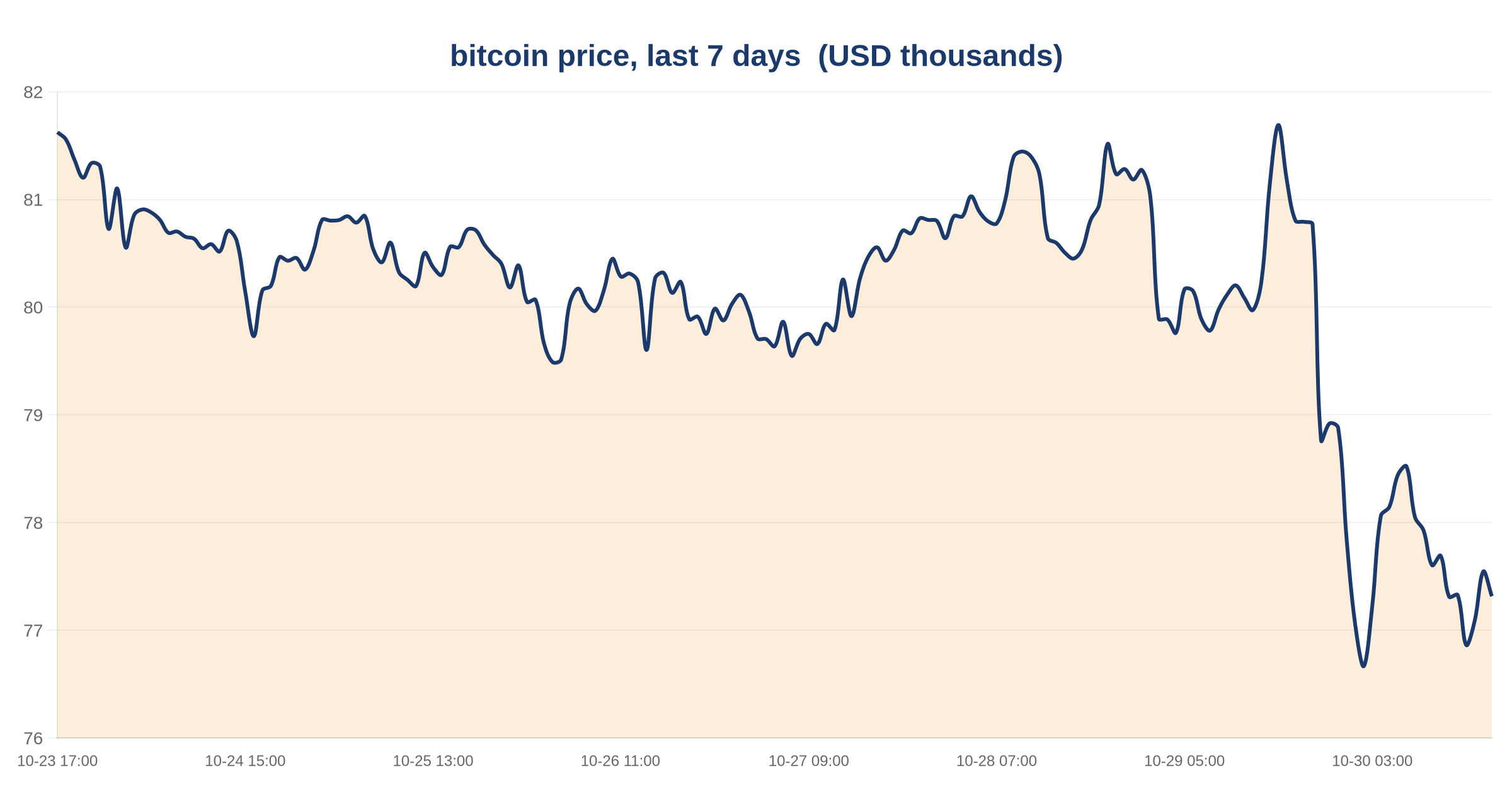
- Bitcoin’s market capitalization reached $1.55 trillion at a price of $77,333 as of October 30, 2026, with that level of hash rate primarily securing transactions rather than creating new coins.
| Metric | Value | As of | Source |
|---|---|---|---|
| btc hash rate | 980.9072300208536 | 2026-10-30 | source |
| btc difficulty | 148364561003867 | 2026-10-30 | source |
| btc tx 24h | 468888 | 2026-10-30 | source |
| btc block time | 10.2424 | 2026-10-30 | source |
| btc supply mined | 20105781.25 | 2026-10-30 | source |
| Price | $77.33K | 2026-10-30 | source |
| 24-hour price change | -4.54% | 2026-10-30 | source |
Almost Every Bitcoin Has Been Mined — and the Network Has Never Pushed Harder
Read the October 30, 2026 snapshot the right way and one number rewrites the others: 20,105,781.25 of Bitcoin’s hard-capped 21,000,000 BTC have already been mined. That is 95.74% of the supply, with fewer than 895,000 BTC left to produce. Against that near-finished issuance sits 980.91 exahashes per second (EH/s) of computing effort. The read is straightforward. That 980.91 EH/s has quietly stopped being mostly about creating Bitcoin and become mostly about protecting it.
What Mining Actually Does at This Scale
Strip away the jargon and mining is a guessing game run at industrial speed. Every machine races to find a number that, combined with a block of transaction data and run through a mathematical function, clears a specific target. That target is the difficulty parameter, currently 1.484 × 10¹⁴, and the higher it climbs the harder the puzzle gets. At 980.91 EH/s, the network is firing off roughly 980,910,000,000,000,000,000 guesses every second for the right to write the next page of Bitcoin’s ledger.
Winning pays twice: the miner takes any newly issued BTC in the block, plus the transaction fees on every payment inside it. The network settled 468,888 transactions across the 24 hours ending October 30. Blocks arrived every 10.24 minutes, fractionally above the 10-minute design target, so roughly 140 blocks landed that day, averaging about 3,350 transactions each. None of those payments became final until a miner spent real energy to include it.
That 1.484 × 10¹⁴ difficulty figure is what holds the 10-minute rhythm. Bitcoin re-tunes difficulty roughly every two weeks: faster miners and quick blocks push it up, offline machines and slow blocks pull it down. The 10.24-minute average on October 30 is the system running close to tempo even with this much hash rate thrown at it.
Why It Matters
Security scales with hash rate, and at 980.91 EH/s rewriting Bitcoin’s history would mean out-computing the entire combined network. The difficulty parameter of 1.484 × 10¹⁴ puts a hard number on that barrier. Behind it sits a network whose market capitalization reached $1.55 trillion on October 30, with BITCOIN trading at $77333.00 after a -4.54% move over the prior 24 hours. The 468,888 transactions settled that day cleared under exactly that protection.
The supply arc, meanwhile, is almost over. With 95.74% of all BTC already circulating, the block reward that first drew miners in is a shrinking slice of what they earn, which pushes transaction fees toward the center of the long-term security model. The block time tells a quieter story of self-correction: nearly 981 EH/s of effort, yet blocks running only 0.24 minutes behind schedule. That is the difficulty adjustment doing precisely its job.
Put plainly, close to a billion billion computations per second are running nonstop, not to mint more Bitcoin, since most of it already exists, but to make altering a single transaction among the hundreds of thousands settled each day mathematically prohibitive. As issuance fades, the 468,888 daily transactions and the fees riding on them are the numbers to watch next.
Disclaimer: Market data is informational only and not investment advice. Figures are accurate as of the stated dates and change continuously.
Frequently Asked Questions
What does 980 EH/s of Bitcoin hash rate actually mean?
The Bitcoin network is performing roughly 980 quintillion guesses per second to solve the mathematical puzzle required to validate transactions and write new blocks to the ledger. At this scale, mining has become primarily about protecting Bitcoin’s existing transactions rather than creating new coins, since 95.74% of the 21 million BTC supply has already been mined.
How does Bitcoin’s difficulty parameter keep the network running on schedule?
Bitcoin’s difficulty is currently set at 1.484×10¹⁴ and automatically re-tunes roughly every two weeks to maintain the target 10-minute block time. On October 30, 2026, the network averaged 10.24 minutes between blocks despite 980.91 EH/s of computing power, showing the difficulty adjustment working as designed.
How many Bitcoin transactions were processed recently and what secures them?
The network processed 468,888 transactions in the 24 hours ending October 30, 2026, with blocks arriving every 10.24 minutes averaging about 3,350 transactions each. None of those payments become final until miners spend real energy to include them in blocks, with the 980.91 EH/s hash rate providing the computational barrier that secures all settled transactions.
How much Bitcoin is left to be mined?
As of October 30, 2026, 20,105,781.25 BTC of the 21 million maximum supply has been mined (95.74%), leaving fewer than 895,000 BTC remaining to be produced.
Data & sources
Every figure in this article is pulled from live on-chain data and linked to its source and the date it was read.
- btc hash rate: 980.9072300208536 (as of 2026-10-30) — source [API]
- btc difficulty: 148364561003867 (as of 2026-10-30) — source [API]
- btc tx 24h: 468888 (as of 2026-10-30) — source [API]
- btc block time: 10.2424 (as of 2026-10-30) — source [API]
- btc supply mined: 20105781.25 (as of 2026-10-30) — source [API]
- Price: $77.33K (as of 2026-10-30) — source [API]
- 24-hour price change: -4.54% (as of 2026-10-30) — source [API]
Methodology: every figure above links to its live on-chain source (DeFiLlama, CoinGecko) and the date it was read; analysis by Blockchain Magazine. Informational only, not investment advice.
Stay informed with daily updates from Blockchain Magazine on Google News. Click here to follow us and mark as favorite: [Blockchain Magazine on Google News].
Disclaimer: Any post shared by a third-party agency are sponsored and Blockchain Magazine has no views on any such posts. The views and opinions expressed in this post are those of the clients and do not necessarily reflect the official policy or position of Blockchain Magazine. The information provided in this post is for informational purposes only and should not be considered as financial, investment, or professional advice. Blockchain Magazine does not endorse or promote any specific products, services, or companies mentioned in this posts. Readers are encouraged to conduct their own research and consult with a qualified professional before making any financial decisions.
About the Author: John Brok