Bitcoin’s network hash rate reached 1,035.78 EH/s as of October 13, 2026, with blocks averaging 8.54 minutes between them, below the protocol’s 10-minute target.
Key takeaways
- Bitcoin’s network hash rate reached 1,035.78 EH/s as of October 13, 2026, with blocks averaging 8.54 minutes between them, below the protocol’s 10-minute target.
- Mining difficulty stands at 1.327×10¹⁴ as of October 13, 2026, and is set to increase at the next adjustment epoch due to faster-than-target block times.
- Of Bitcoin’s 21,000,000 maximum supply cap, 20,097,740.625 BTC had already been mined as of October 13, 2026, leaving less than 3% of the total supply remaining to be claimed.
- The Bitcoin network processed 769,448 transactions in the 24 hours ending October 13, 2026, generating the transaction fees that will sustain miners as block rewards diminish toward zero.
| Metric | Value | As of | Source |
|---|---|---|---|
| btc hash rate | 1035.7836769803594 | 2026-10-13 | source |
| btc difficulty | 132716002350731 | 2026-10-13 | source |
| btc tx 24h | 769448 | 2026-10-13 | source |
| btc block time | 8.5385 | 2026-10-13 | source |
| btc supply mined | 20097740.625 | 2026-10-13 | source |
| Price | $83.21K | 2026-10-13 | source |
| 24-hour price change | +0.89% | 2026-10-13 | source |
Record Compute Is Outrunning the Clock, With Almost No Supply Left to Claim
Price isn’t the story in Bitcoin’s current data. The gap between how fast miners produce blocks and how fast the protocol expects them to is. As of October 13, 2026, the average interval between blocks is 8.54 minutes, below the 10-minute target written into the protocol. Hash rate stands at 1,035.78 EH/s and difficulty sits at 1.327 × 10¹⁴. Read together, those figures describe an enormous pool of compute that is, for now, beating the clock. Bitcoin is built to answer that: a sustained block time under 10 minutes forces difficulty higher at the next epoch, making the puzzle harder until the cadence drifts back toward target. Miners are working hard enough to compress time, and the protocol is designed to push back.
That pressure lands just as the minable supply runs thin. Of the hard-capped 21,000,000 BTC maximum, 20,097,740.625 BTC had already been mined as of October 13, 2026. The competition is at peak intensity for a prize pool the protocol’s own math has nearly emptied.
How Mining Actually Works
Miners compete to solve a cryptographic puzzle. Whoever solves it first appends the next block of transactions and claims the block reward. The difficulty figure, currently 1.327 × 10¹⁴, measures how hard that puzzle is: a higher number means more attempts are needed, on average, before a valid solution turns up. Hash rate, at 1,035.78 EH/s, measures how fast every miner on earth is making those attempts combined, counted in exahashes, quintillions of guesses, per second.
The network recalibrates difficulty to hold the average block time near 10 minutes. With the current average running at 8.54 minutes, the next adjustment is set to raise difficulty, lifting the bar for every miner at once.
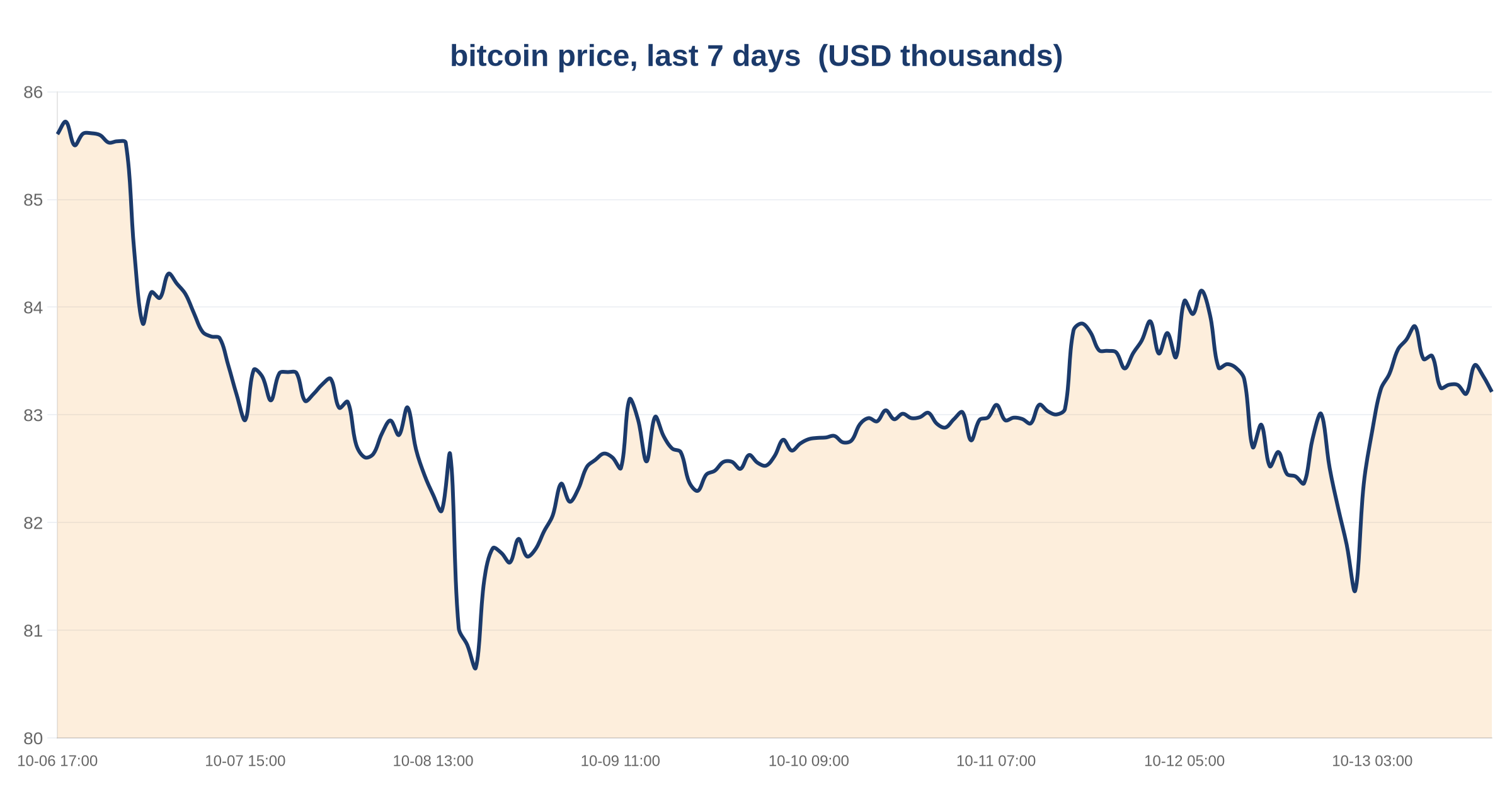
Against that backdrop, the network settled 769,448 transactions over the 24 hours to October 13, 2026. BITCOIN traded at $83,206.00 across the same window, a market capitalization of $1.67 trillion and a 24-hour move of +0.89%.
Why It Matters
- Compute keeps climbing as the reward shrinks. With 20,097,740.625 BTC of the 21,000,000 cap already mined, the marginal block reward is a diminishing asset, yet hash rate still holds above 1,000 EH/s at 1,035.78 EH/s. Competitive pressure hasn’t eased alongside the shrinking supply.
- Block time points to a difficulty increase. An 8.54-minute average means blocks are settling faster than the 10-minute design target, and the self-correcting mechanism will respond by raising the 1.327 × 10¹⁴ figure at the next epoch.
- Transaction throughput is the revenue driver that survives. As the subsidy falls toward zero with each halving, the 769,448 daily transactions and the fees they carry become the economic base that has to sustain miners once new BTC supply is fully exhausted.
Disclaimer: Market data is informational only and not investment advice. Figures are accurate as of the stated dates and change continuously.
Frequently Asked Questions
What is Bitcoin’s current hash rate and what does it measure?
As of October 13, 2026, Bitcoin’s network hash rate stands at 1,035.78 EH/s, which measures how fast all miners combined are making cryptographic puzzle-solving attempts, counted in exahashes (quintillions of guesses per second).
Why is mining difficulty expected to increase?
The average interval between Bitcoin blocks is currently 8.54 minutes, below the protocol’s 10-minute target, and the self-correcting mechanism will raise difficulty at the next adjustment epoch to bring block times back toward the design target.
How much of Bitcoin’s maximum supply has been mined?
As of October 13, 2026, 20,097,740.625 BTC of the 21,000,000 maximum supply has been mined, leaving less than 3% of the total supply remaining to be claimed.
What sustains miners as block rewards shrink?
Transaction fees from the 769,448 transactions processed daily become the economic base that sustains miners as the block subsidy diminishes toward zero with each halving.
Data & sources
Every figure in this article is pulled from live on-chain data and linked to its source and the date it was read.
- btc hash rate: 1035.7836769803594 (as of 2026-10-13) — source [API]
- btc difficulty: 132716002350731 (as of 2026-10-13) — source [API]
- btc tx 24h: 769448 (as of 2026-10-13) — source [API]
- btc block time: 8.5385 (as of 2026-10-13) — source [API]
- btc supply mined: 20097740.625 (as of 2026-10-13) — source [API]
- Price: $83.21K (as of 2026-10-13) — source [API]
- 24-hour price change: +0.89% (as of 2026-10-13) — source [API]
Methodology: every figure above links to its live on-chain source (DeFiLlama, CoinGecko) and the date it was read; analysis by Blockchain Magazine. Informational only, not investment advice.
Stay informed with daily updates from Blockchain Magazine on Google News. Click here to follow us and mark as favorite: [Blockchain Magazine on Google News].
Disclaimer: Any post shared by a third-party agency are sponsored and Blockchain Magazine has no views on any such posts. The views and opinions expressed in this post are those of the clients and do not necessarily reflect the official policy or position of Blockchain Magazine. The information provided in this post is for informational purposes only and should not be considered as financial, investment, or professional advice. Blockchain Magazine does not endorse or promote any specific products, services, or companies mentioned in this posts. Readers are encouraged to conduct their own research and consult with a qualified professional before making any financial decisions.
About the Author: John Brok